1. What is your personal definition of succesful aging? How has this definition changed from the beginning of the semester?
Now that I've taken this seminar I would say my definitely of successful aging has changed. I no longer believe that there is no such thing as successful aging. However, there is no one way to describe successful aging. I think that successful aging is very much based on what the individual believes it to be. I say, now, that successful aging is eating right for your body, exercising in moderation, living a low stressed lifestyle, and having a balanced social life. Each of those can be determined at different levels for each person.
2. What was one topic or fact that you found to be the most interesting throughout the semester?
The topic I found most interested throughout the seminar was the Blue Zones.
3. What is one aspect of successful aging that you would like to continue learning about?
More along the lines of the nutritional aspect. I would love to read more about studies on what kinds of foods are healthy and not healthy.
4. Has any of the information that we've discussed in class change your perspective about successful aging? (i.e. Are there any behaviors that you will or will not do as a result of learning about aging?)
I will definitely be looking into eating better and exercising a little bit more. Both of those factors play such a huge role in mental and physical health. I guess I just never realized how important it was.
Sunday, May 1, 2011

Tuesday, April 12, 2011
Aging in the News!
This study, published in the Journal of Epidemiology and Community health (April 6th) talks about how shopping may actually increase longevity. It's stated within the article that "it's also possible that shopping itself could improve health by ensuring a good supply of food for a healthy diet, ensuring exercise by walking around, and providing social interaction and companionship in the form of shopping buddies."
I find this article very interesting because they state that it was only done on Taiwanese people. The people that are actually found to live longer might possibly also be because they lead a move healthy and active lifestyle. I find that there are a lot of problems with this study, however, it is interesting regardless. My grandmother loves to shop! So I wonder if this study is actually legitimate.
Tuesday, March 29, 2011
Financial Aging
The financial calculator was interesting. I didn't find it very helpful because it was hard for me to estimate what I'll be making in the future. The main reason is because I have yet to really decide what I want to do. It also depends a lot upon what schooling I decide to go through with (grad school, vet school, etc.). There is only so much saving I can do at this point in my life, what with school loans and other life necessities. I will hopefully be able to retire at 65 or sometime before 70. Who knows though, the economy is always changing. It is too hard to predict.
Tuesday, March 8, 2011
Centenarian Study
The Georgia Centenarian Study has many interesting concepts. I found it almost mind-boggling to see that this group of people lived to these ages by eating a typical "southern" diet. Nowadays, nutritionists and media tell us to eat "healthy". Fruits, vegetables, all portion sized. I don't think someone would believe you if you told them they could survive, or in their case live a healthy life, off of bacon and fried chicken. Another interesting point I saw in the study was that centenarians are very, very positive. They are happy-go-lucky people without a care in the world! I heard many question, "Why worry?". If it was that easy to go through life with so much positivity, everyone would live to over 100, well maybe.
I had a great-aunt who lived to be 102 years old. After watching this study, I can see now that some of the characteristics she had were very much like those of the participants in the Georgia Centenarian Study. She always surrounded herself with family and loved ones. She kept a very positive outlook on life, even when things were bleak. I feel there is still so much to be learned from centenarians.
I had a great-aunt who lived to be 102 years old. After watching this study, I can see now that some of the characteristics she had were very much like those of the participants in the Georgia Centenarian Study. She always surrounded herself with family and loved ones. She kept a very positive outlook on life, even when things were bleak. I feel there is still so much to be learned from centenarians.
Tuesday, February 22, 2011
Life Expectancy Calculator
91. That's what I am predicted to live to based upon my answers. I thought the Life Expectancy Calculator was a fun and different approach to learning about aging. While taking the quiz I found myself agreeing with the majority of the questions that were asked. Aging is not solely based on genetics (although they do play a huge role in it). I think that there are many other things that factor into aging. For instance, family life and stress levels can directly influence what age someone reaches. I believe there have been studies that show individuals who live with one or more people have the potential to reach an older age than those who don't. Also, stress levels can alter different hormones in the body which can effect the rate of aging. I would say that during school I'm a normally very highly stressed person. I expected my predicted age to be a lot lower than 91 due to my high stress levels. Apparently I was wrong?
I found the questions asked about nutrition were also very important in determining your potential maximum age. I had a friend take the quiz as well. She and I have very different eating habits, but fairly similar stress levels and social/family aspects of our lives. Her calculated age, however, was significantly lower than mine. This makes me wonder how much emphasis this quiz put on the nutritional portion. Either way, one single quiz is not going to be 100% accurate in determining a maximum age someone will live to. It is hard to take in to account for what someone will experience within the next 10 to 20+ years of their life.
 I was particularly interested in the question about flossing teeth and how that had to do with your overall health. I've grown up with dentists for parents and have been told multiple times throughout my life that flossing is not only keeping your teeth clean/healthy, it helps prevent heart disease and certain stomach cancers.
* Here's an article that relates flossing to overall health of the body Healthy Teeth, Healthy Heart. Enjoy! *
Monday, February 14, 2011
Aging and Genetics
Although this article is a bit dated, it sums up how I feel about this subject. The article states, "getting old is more than just getting wrinkles and not understanding today's teenagers." I believe that genetics plays a huge determining factor in aging. One key example mentioned is the degradation of our telomeres. Once these become too short or are no longer existent, the cells stop dividing and cannot repair themselves. This has been a huge issue in the science world and many studies are being performed to better understand this. Within the article it also touches on a lot of what Dr. Bronikowski discussed involving caloric limitations in mice. I would definitely like to learn more about how aging and genes relate to one another.
"Getting Old"
"Getting Old"
Tuesday, February 1, 2011
Endless Youth
Youth. In our society today, it is the epitome of happiness. When our parents and grandparents speak to us, they more often than not will say, "cherish these years because they will be the best years of your life." Age plays an all too important role in our daily lives. It is no wonder why people are getting plastic surgery left and right. This is shown in what we as a society deems as youth.
In our world today, the older someone gets, the younger they want to look. This is when people rely on plastic surgery. In an article I read this week, teens as young at 16 are pushing to get liposuction, plastic surgery, and nose jobs to emulate the celebrities that grace literally every cover of our magazines and tabloids. The media has gone too far and is etching uncharacteristically thin and perfectly polished men and women into the mind's of our youths. When did this become something everyone wanted? Why is it so apparent in our society today?
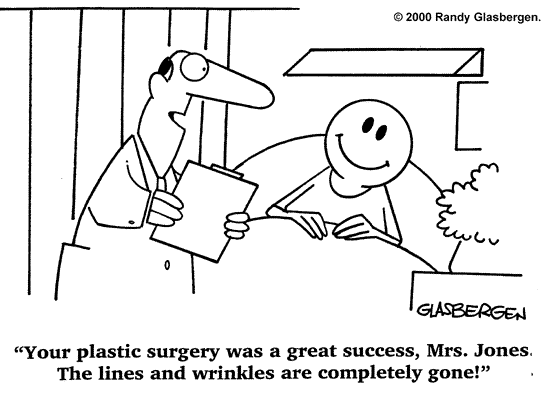
In our world today, the older someone gets, the younger they want to look. This is when people rely on plastic surgery. In an article I read this week, teens as young at 16 are pushing to get liposuction, plastic surgery, and nose jobs to emulate the celebrities that grace literally every cover of our magazines and tabloids. The media has gone too far and is etching uncharacteristically thin and perfectly polished men and women into the mind's of our youths. When did this become something everyone wanted? Why is it so apparent in our society today?
Sunday, January 23, 2011
Why do we age?
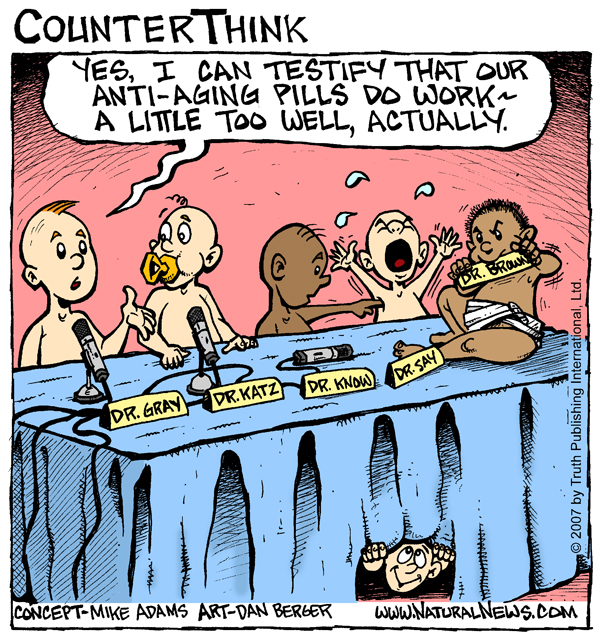
Everyone has a different rate at which their body and mind ages. I believe there are huge biological processes that contribute to aging. Genetics have a large role in this too. Dependent on what genes you are given from your parents, this can heavily influence what your body goes through. Whether you lose your hair at a young age, whether you develop cancer that runs in the family, or whether you develop symptoms of some other inherited characteristic or disease, these all are due to aging. There is no way to prevent aging, however, our society believes you can. Plastic surgery, pills, etc. will all give the temporary solution to the glorified looks of youth.
In the reading Why We Age: Why Does Aging Happen, I found it particularly interesting that there could possibly be more than 300 theories on aging. I definitely believe it, but wow, that's such a large number! The concept of aging is terribly hard to explain because of all these theories. It may all be relative to what an individual sees or believes. There has to be some explanation in genetics that answer the question why we age, but I honestly can't answer that question.
I found this video on YouTube that I found very interesting. Check it out, it's a man who takes pictures of himself over the course of 17 years. It's amazing to see the changes in his physical appearances. It's a definite sign of aging.
http://www.youtube.com/watch?v=Bd4f2xeKg08
Tuesday, January 18, 2011
What is healthy aging?
What would you define as healthy aging?
To be honest, I don't believe that healthy aging exists. Within our society today there are so many ways to counteract a so called "healthy aging". Whether we realize it or not our everyday activities are taking a toll on our bodies. Exercising too much, eating too healthy, eating too much or not enough, over medicating in the belief that we're keeping ourselves healthy, and so many other things can be considered an unhealthy way of life and aging. Too much of a good thing can become a very bad thing.
Though, I do believe there are steps to become healthy. However, in this world... it's extremely hard to pin point those things. It differs for every person, every body type, and every being. Its hard to determine what the right amount of exercise or food for one is. We all age differently, some better than others. Its up to the individual and what they choose to do with their life that determines their "healthy aging".
At what point in the lifespan does aging happen?
It depends on the definition you give aging. It could start at at conception, at birth, at the first wrinkle you see, or the gray hair on your head. I think believe aging happens at conception. The living being is constantly changing, nothing about us is static. I consider growth and development aging, therefore I believe it starts at conception.
How would you measure this? Can it be applied to everyone?
Every living being undergoes a certain amount of growth and development, so yes, aging can definitely be applied to everyone, everything. Aging can be measured in the sense of how fast someone's physical and mental characteristics change.
Subscribe to:
Posts (Atom)